
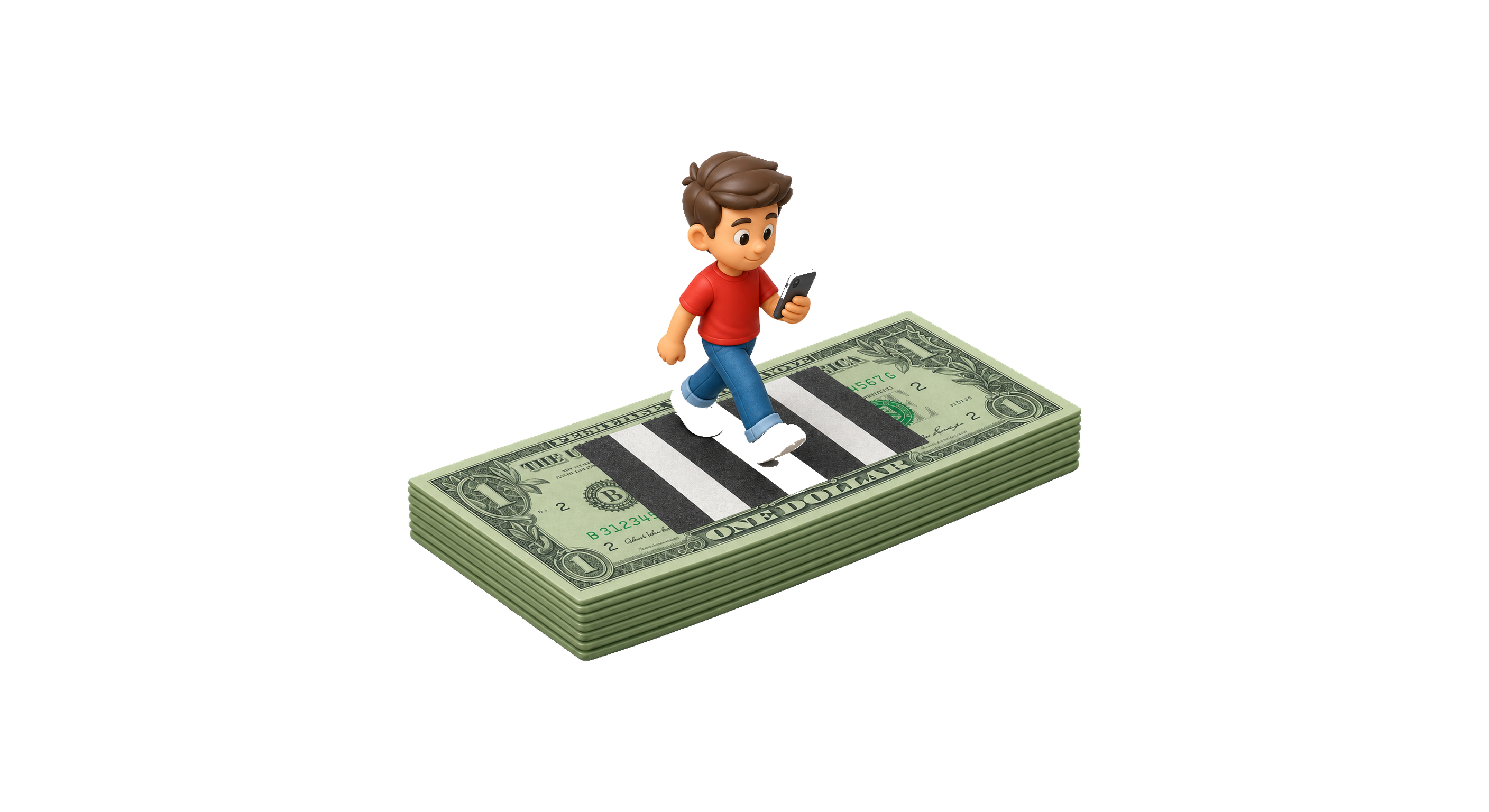
For Marcus Chen, the humid Houston evening of July 18, 2026, was just another shift. He was a Grubhub courier, hustling an order from a bustling taco truck on Washington Avenue to an apartment near Memorial Park when he made a split-second decision. To save time, he cut across Westcott Street mid-block, a common move for people trying to beat the clock in a city built for cars. As he stepped off the curb, a car hit him, throwing him several feet. This incident, mixing a Grubhub courier acting as a Houston pedestrian with a clear case of jaywalking, instantly created a messy fight over liability, workers’ comp, and the precarious reality of gig work.
Key Takeaways
- If you’re hit by a car while jaywalking in Georgia, you can still recover money, but your compensation will be reduced based on your percentage of fault under the state’s comparative negligence rules.
- Gig workers like Grubhub couriers typically can’t get workers’ compensation because their companies classify them as independent contractors, not employees, which is a constant legal battle.
- After a pedestrian accident, your first moves are everything: get medical care immediately, document the scene with photos, and call a personal injury attorney to understand your options.
- The laws for gig workers in Georgia are still being hammered out in 2026, so it’s absolutely essential for couriers to know their classification and what the current statutes say.
- You have to understand Georgia’s modified comparative negligence rule (O.C.G.A. Section 51-12-33), as it’s the law that determines who gets paid in any accident where both parties share some of the blame.
Lying on the asphalt next to scattered, cold tacos, Marcus’s problems were just beginning. The driver, a young woman named Sarah Thompson, stopped, clearly shaken. An ambulance rushed him to Memorial Hermann-Texas Medical Center for a broken leg and several lacerations. The Houston Police Department’s accident report came back and, sure enough, it officially noted he crossed outside a designated crosswalk. For a college kid using Grubhub to cover tuition, this was a disaster. The medical bills would pile up, and he couldn’t work. We see this exact situation play out all the time, a gig worker gets hurt on the job but as a pedestrian, throwing them into a legal and financial nightmare.
That first police report isn’t the final word on who pays. In a civil case, it’s just one piece of evidence. What really matters is the concept of comparative negligence. In Georgia (as in Texas), this is the whole game. Georgia specifically follows a modified comparative negligence rule, written right into the law at O.C.G.A. Section 51-12-33. The rule is harsh: if you’re found 50% or more to blame for your own injuries, you get nothing. Zero. But if you’re found 49% at fault, you can still recover damages, though your final award is cut by that 49%. It’s a make-or-break calculation that most people, especially pedestrians ticketed for jaywalking, have no idea exists.
Injured as a pedestrian?
Know what your case is worth with AI Pedestrian Payout Calculator for FREE!
Start my free evaluationFrom a practical legal standpoint, the first thing to do in a case like Marcus’s is to dig into who was truly at fault. Sure, the police report mentions jaywalking, but that doesn’t just let the driver off the hook. Every driver has a duty to pay attention and avoid hitting people, even people who aren’t in a crosswalk. Was Sarah speeding? Was she looking at her phone? Was she distracted by something else in the car? These are the real questions. An investigation would mean immediately pulling surveillance footage from businesses along Westcott Street, finding any eyewitnesses, and picking apart Sarah’s own statements. If video showed her looking at her phone right before impact, her share of the blame would skyrocket, making Marcus’s jaywalking a much smaller factor.
On top of the claim against the driver, Marcus had a completely separate problem: his relationship with Grubhub. Gig companies like Grubhub, DoorDash, and Uber Eats are famous for classifying their couriers as independent contractors. That label has huge consequences for workers’ comp eligibility. In Georgia, actual employees get workers’ compensation benefits that cover medical bills and lost wages no matter who was at fault. Independent contractors, on the other hand, are usually left with nothing. The entire outcome can hinge on how the Georgia State Board of Workers’ Compensation views the work relationship.
Injured on the job?
3 in 5 injured workers never receive their full benefits. Your employer’s insurer is not on your side.
The legal fight over how to classify gig workers has been a warzone for years. While a few states have passed new laws to give these workers more protections, Georgia has largely stuck with the traditional independent contractor tests. To prove someone is actually an employee, courts and the Board look at things like how much control the company has over the worker, who supplies the tools (like the car), and how essential the work is to the company’s main business. For Marcus, you could argue it both ways. Grubhub controlled his routes and service standards, which sounds like an employee. But Marcus used his own car, set his own hours, and could work for competitors, which sounds like a contractor. Sorting through this mess is not a DIY project.
Even if Marcus was in the end considered an independent contractor, the case wouldn’t have been completely dead. There are sometimes other avenues for recovery, like certain commercial insurance policies that might offer coverage. It’s also sometimes possible to file a separate negligence claim against Grubhub itself if its app or operational policies pushed couriers into unsafe situations. These are always uphill battles, though, because companies like Grubhub have armies of lawyers paid to defend their contractor model. This is where a good personal injury attorney earns their keep. A lawyer can take the courier agreement Marcus signed and tear it apart, looking for any clause or practice that doesn’t fit the standard contractor relationship to build a case for compensation.
What you do right after an accident is everything. Marcus getting prompt medical care was the right move, not just for his health but for his case. If you wait to see a doctor, the insurance company will argue your injuries weren’t that bad or that something else caused them later on. Every medical record, bill, and prescription slip becomes vital evidence. The same goes for photos of the scene, the vehicle damage, and your injuries, along with contact information for any witnesses. You have to gather all these details, because they form the foundation of a successful personal injury case.
For someone like Marcus, the financial pressure after a crash is just overwhelming. You’ve got lost paychecks, hospital bills arriving daily, and you can’t work, which causes unbelievable stress. A personal injury claim is designed to recover money for all of that, medical bills, lost income, pain and suffering, and even future medical needs. But nobody should expect a quick check. The process is a grind. Negotiations with insurance companies can drag on, and if a lawsuit is necessary, it can take years. That’s why most personal injury lawyers work on a contingency fee basis, meaning we only get paid if we win the case. It’s the only way a normal person without a pile of cash can afford to seek justice.
And don’t forget the psychological toll. Getting hit by a car, even when you share some of the blame, does a number on your head. Marcus was likely dealing with trauma, anxiety, and maybe even guilt. These non-economic damages are also part of a personal injury claim, though they are definitely harder to put a price tag on. We often use testimony from psychologists or therapists to help a jury understand the real extent of these mental injuries. It’s a huge mistake to only think about the physical damage. The mind suffers, too.
Thinking about the location, Westcott Street near Memorial Park is a busy, high-traffic corridor. Pedestrian safety is always a problem in these urban areas. The City of Houston’s Public Works Department is always conducting studies and putting in fixes like better crosswalks or new signals, but those measures don’t remove the basic responsibility of drivers and pedestrians to be careful. The sad irony here is that Marcus was trying to be more efficient to do his job well, and in doing so, he put himself directly in harm’s way. It’s a perfect example of the tension between speed and safety that defines the gig economy. The pressure to complete more deliveries faster, driven by app metrics and customer ratings, quietly encourages couriers to take risks.
In a case where a pedestrian is hit while jaywalking, you can bet the driver’s insurance company will come out swinging, blaming the pedestrian for everything to try and deny the claim. That’s where a skilled attorney can completely change the outcome. An attorney can hammer home the driver’s duty of care, show how the driver’s own mistakes contributed to the crash, and negotiate aggressively for a fair settlement. The fact that someone was jaywalking doesn’t mean their claim is worth zero.
For example, let’s say a jury decides Marcus’s total damages are $100,000. If they find he was 40% at fault for the accident, he’d get $60,000. But if they find him just a little more at fault, say 51%, he would get absolutely nothing under Georgia’s law. That razor-thin margin is why a thorough investigation and strong legal arguments are so important. The difference between 49% and 51% fault is the difference between getting help and getting nothing at all.
In the end, Marcus’s case was resolved after a long negotiation with Sarah Thompson’s insurance company, which at first offered a tiny settlement blaming him for jaywalking. After months of arguing, which included presenting expert analysis on driver reaction times and the specific sightlines at the crash location, they reached a confidential settlement. It gave Marcus money for his medical bills and lost wages, plus something for his pain and suffering, though it was reduced because of his share of the fault. He learned a hard lesson: speed in the gig economy is one thing, but personal safety has to come first, and knowing your legal rights is not optional.
This whole incident should be a wake-up call for pedestrians in Houston, especially people in a hurry like delivery workers. Use the crosswalk. Obey the signals. For gig workers specifically, it shows just how vulnerable you are and why you have to understand the fine print of your employment classification. When an accident happens, taking immediate action, documenting everything, and getting competent legal advice are essential to working through the aftermath.
If you or someone you know has been in a pedestrian accident in Georgia, it’s important to understand your rights and the state’s tough comparative negligence laws. Even if you think you were partly to blame, a legal review of your case could find ways for you to get compensation you didn’t think were possible.
Can a pedestrian who was jaywalking still get paid for their injuries in Georgia?
Yes. Under Georgia’s modified comparative negligence rule (O.C.G.A. Section 51-12-33), a jaywalking pedestrian can recover damages, but only if they are found to be less than 50% at fault. Any money they are awarded will be reduced by their percentage of fault.
Are Grubhub couriers employees or independent contractors for workers’ comp in Georgia?
In Georgia, gig companies like Grubhub almost always classify their couriers as independent contractors. This means they generally are not eligible for workers’ compensation benefits. However, whether that classification is legally correct can be a complex fight that depends on the details of the job, and an attorney can help assess the situation.
What are the first things a pedestrian should do after being in an accident?
First, get medical attention, even if you feel fine. Then, call the police to file a report, get contact information from any witnesses, and take as many photos as you can of the scene, the car, and your injuries. Don’t admit fault to anyone, and call a personal injury lawyer as soon as you can.
What kind of money can you get from a pedestrian accident claim?
A pedestrian accident claim can cover damages for past and future medical bills, past and future lost wages, pain and suffering, and emotional distress. The exact amount and types of damages depend on how bad your injuries are and the specific facts of the crash.
How does O.C.G.A. Section 51-12-33 really affect a pedestrian’s case in Georgia?
This law, Georgia’s modified comparative negligence rule, is the most important factor in any shared-fault accident. It means if a pedestrian is found to be 50% or more responsible for the accident, they are legally barred from recovering any money. If their fault is 49% or less, they can recover damages, but the total is reduced by their fault percentage.



