
Key Takeaways
- Under O.C.G.A. Section 51-3-1, Atlanta restaurant owners have a legal obligation to keep their property safe, which includes making sure their grease traps are working properly to prevent falls.
- If you’re hurt in a restaurant slip and fall because of a neglected grease trap, you can file a premises liability claim, but you’ll have to prove the restaurant knew (or should have known) about the danger.
- Keeping grease traps in good working order is the best way to cut down on slip hazards, which helps avoid lawsuits and protects customers and staff from getting seriously hurt.
- What you do right after a slip and fall matters, gathering evidence like photos, witness contacts, and an incident report is essential for building a strong case in Georgia.
- Atlanta’s local health codes have specific rules for cleaning and maintaining grease traps, and businesses that ignore them face fines and create unsafe conditions.
A good meal out in Atlanta can be ruined in a second by a patch of slick, invisible grease on the floor. When it’s from a neglected grease trap, these slip and fall incidents often lead to serious injuries and complicated legal fights. If you’re the one who fell, knowing how these restaurant slip and fall cases work, especially with grease traps involved, is the first step toward getting justice in Atlanta. So how does Georgia law handle these completely preventable hazards?
The Hidden Danger: How Grease Traps Contribute to Slip and Falls
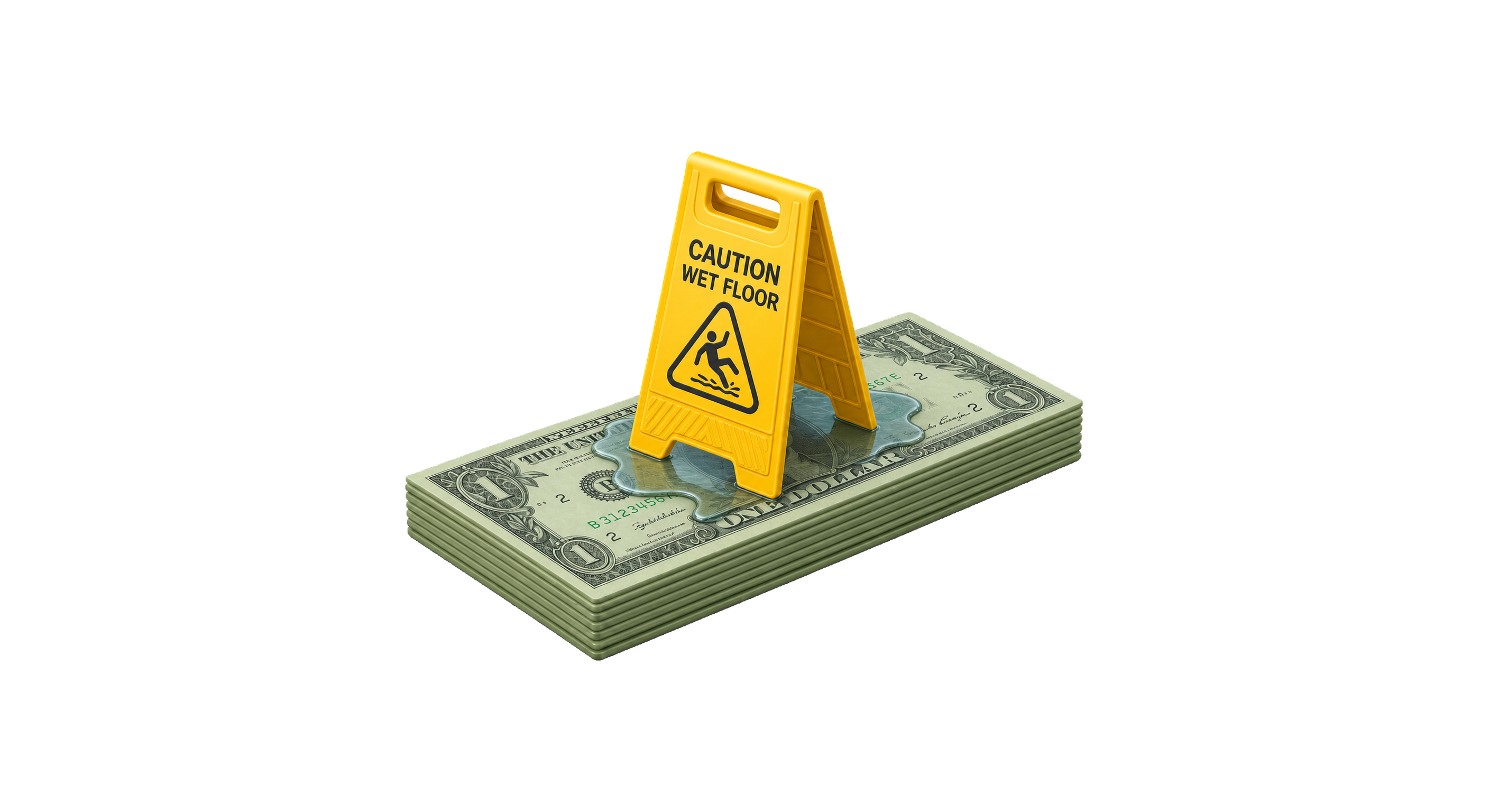
Grease traps are a non-negotiable part of any commercial kitchen. They’re built to catch fats, oils, and grease (FOG) so that stuff doesn’t clog up the whole city’s wastewater system. While they prevent plumbing disasters, they become a huge hazard if they aren’t maintained. When a grease trap overflows, leaks, or gets cleaned the wrong way, that FOG ends up on kitchen floors, in service hallways, or even tracked out onto sidewalks, creating an invisible and dangerous slick for anyone walking nearby.
That FOG residue is like hitting black ice. It destroys any traction on the floor. An employee rushing an order or a server working through a busy dining room can go down in an instant. A customer walking in or out of the restaurant could step right onto grease that’s been tracked out from the back, with no warning at all. The falls I see from this kind of thing cause terrible injuries, broken bones, head trauma, and even spinal damage that can mean a long, painful recovery and a mountain of medical bills. The fallout for victims is huge, affecting their ability to work and just live their normal life.
Injured in a slip & fall?
Know what your case is worth with AI Slip & Fall Payout Calculator for FREE!
Start my free evaluationIt almost always comes down to negligence. When a restaurant owner doesn’t bother with a regular maintenance schedule, fails to train staff on how to clean up properly, or just ignores a spill, they’re creating the conditions for someone to get badly hurt. You have a right to expect a business to be safe, and when that trust is broken by something as basic as a leaky or full grease trap, questions of liability aren’t far behind.
Establishing Liability in Atlanta: Premises Law and Negligence
In Georgia, slip and fall cases fall under premises liability law. The code section is O.C.G.A. Section 51-3-1, and it says property owners have to use “ordinary care” to keep their property safe for customers (or “invitees”). This means they have to look for dangers and fix them. To win a slip and fall case involving a grease trap at an Atlanta restaurant, you have to prove a few things about the restaurant’s negligence.
The first hurdle is proving the restaurant owner or their staff had actual or constructive knowledge of the dangerous condition. Actual knowledge is straightforward: they knew the trap was overflowing or that there was a grease spill. Constructive knowledge is more common in these cases and means the grease was on the floor for long enough that they *should have* found it if they were doing their jobs and inspecting the premises properly. This is where we dig into security camera footage, maintenance logs, and employee testimony to build a timeline.
Next, you have to show the restaurant didn’t use ordinary care to either clean up the mess or at least warn people about it. This could mean they had no regular cleaning schedule for the grease trap, didn’t mop up a known spill, or failed to put out “wet floor” signs. The standard is “ordinary care,” which really just means what a reasonable person would do. For example, what’s considered reasonable for a high-traffic restaurant in Midtown Atlanta is a higher bar, demanding more frequent inspections than you’d expect from a quiet diner out in the country.
Injured on the job?
3 in 5 injured workers never receive their full benefits. Your employer’s insurer is not on your side.
Finally, your lawyer has to connect that failure directly to your injuries. This link, called causation, is everything. If the grease from their busted trap made you fall and that fall broke your wrist, causation is there. Without it, you don’t have a case, even if the restaurant was clearly careless. This is why documentation like medical records, photos from the scene, and witness statements is so important. I’ve fought plenty of cases where the defense tries to blame my client’s shoes or a pre-existing knee problem, making the burden of proof that much higher for us.
| Factor | Restaurant Owner’s Perspective | Victim’s Perspective |
|---|---|---|
| Legal Duty | Maintain safe premises (O.C.G.A. Section 51-3-1) | Seek justice for injuries |
| Grease Trap Status | Properly maintained: reduced risk, no lawsuits | Neglected: invisible threat, serious injury |
| Liability Proof | Avoid actual/constructive knowledge of hazard | Prove restaurant’s actual/constructive knowledge |
| Preventative Action | Regular maintenance, staff training, adherence to health codes | Collecting evidence immediately after incident |
| Consequences | Fines, legal action from authorities, civil liability | Medical treatment, prolonged recovery, complex legal battles |
The Role of Maintenance and Regulations in Preventing Incidents
Preventing falls from grease traps isn’t just a good idea. It’s often the law. The City of Atlanta’s Department of Watershed Management has specific ordinances for how restaurants have to manage Fats, Oils, and Grease (FOG). These rules demand regular cleaning, correct FOG disposal, and properly sized grease traps. If restaurants don’t comply, the city can hit them with fines and legal trouble, on top of getting sued by anyone who gets hurt on their property.
But good maintenance is proactive safety, not just about dodging fines. It means having a set schedule for a professional service to come clean the grease trap, usually monthly or quarterly, depending on how busy the kitchen is. It also means kitchen staff should be doing daily checks for leaks or spills around the trap and have a clear protocol for cleaning them up immediately. A lot of restaurants will also use non-slip mats in the kitchen and require employees to wear slip-resistant shoes. These sound like small things, but they make a huge difference in preventing accidents.
Think about the effect on the staff, too. A kitchen with constant slip hazards doesn’t just put customers at risk. It’s dangerous for employees. The Georgia State Board of Workers’ Compensation is who handles those claims when an employee gets hurt at work. A fall from a poorly maintained grease trap can easily lead to a workers’ comp claim, which drives up their insurance premiums and could even get OSHA involved if it looks like a pattern of unsafe conditions. Prevention always costs less than an accident, both in dollars and in human pain.
Gathering Evidence: Building a Strong Case After a Fall
After a fall in an Atlanta restaurant, the evidence you can gather right then and there is absolutely vital. I know the moments after an accident are confusing and painful, but what you do next can make or break a legal claim. I tell all my clients to grab as many specific details as they can at the scene.
First, if you’re physically able, take photos and videos with your phone. Get everything. Document the exact spot where you fell, what was on the floor, the condition of the lighting, and whether there were any warning signs (or a lack of them). You need pictures from every angle, close-ups of the grease, wide shots of the area, to build a powerful visual record of what happened. If you can see where the grease came from, like a leaking pipe or an overflowing trap, get a picture of that too.
Second, get medical help right away. Go to an ER or urgent care, even if you think you’re fine. Some injuries, like concussions or soft tissue damage, don’t show up for hours or even days. Getting checked out creates a medical record that officially ties your injuries to the fall. Make sure you tell the doctors exactly how and where you fell. And hang on to every single medical bill and record.
Third, look for witnesses and get their names and phone numbers. An independent person backing up your story is incredibly powerful and much more convincing than just your own testimony. If employees are around, ask them to file an incident report. It’s the restaurant’s official record that an accident happened, even if their version of events is self-serving. Do not, under any circumstances, give a recorded statement to the restaurant’s insurance adjuster without talking to a lawyer first. Their job is to pay out as little as possible, and they will twist your words against you.
Finally, look at the whole picture. Was the lighting bad? Were there any cones or barriers? Did employees rush to clean up the spill right after you fell? All these details help paint a complete picture of the restaurant’s negligence. A lawyer can then use the discovery process to demand things like the grease trap maintenance logs, employee training manuals, and cleaning schedules to prove the case.
Legal Recourse and Compensation for Victims
If you’re hurt in a restaurant slip and fall in Atlanta, you have the right to seek compensation for your injuries. A premises liability claim is designed to recover your financial losses and make you “whole” again, at least as much as money can. This compensation covers both economic and non-economic damages.
Economic damages are the tangible, out-of-pocket costs. This means you can be compensated for things like your emergency room visit, any surgery you needed, physical therapy, and prescription drugs. It also includes the wages you lost from being unable to work and, if the injury is permanent, the loss of future earning capacity. Keeping a detailed file of all these bills and pay stubs is essential.
Non-economic damages are for the harm that doesn’t come with a receipt, but they are just as real. This is compensation for your pain and suffering, emotional distress, and the loss of enjoyment of life. It’s hard to put a price on this kind of suffering, but it’s a very real part of the harm that was done to you. For instance, a professional musician who breaks their wrist in a fall doesn’t just lose income. They lose the ability to practice their art, and that has a huge emotional cost.
In Georgia, you generally have two years from the date you were hurt to file a lawsuit for personal injury, according to O.C.G.A. Section 9-3-33. If you miss that deadline, your right to sue is usually gone forever. These cases are complex and require an experienced lawyer. An attorney who specializes in premises liability knows how to value your claim, negotiate with the insurance company, and fight for you in court if it comes to that (likely in the Fulton County Superior Court). These are not straightforward cases, and you can bet the insurance company will use every trick in the book to avoid paying what you deserve.
The number of slip and falls in Atlanta restaurants, especially those tied to unkempt grease traps, points to a serious safety problem. Victims need to know their rights and what they must do to hold negligent businesses accountable under Georgia law. Acting fast and documenting everything is where a successful claim begins.
What does “ordinary care” actually mean for a restaurant in Georgia?
In Georgia, the “ordinary care” standard means a restaurant owner has to act like a reasonably careful person would to keep their property safe for customers. In practice, this means regularly checking for hazards like spills, fixing them quickly, or putting up clear warnings.
How do you prove a restaurant “should have known” about a grease spill?
Proving “constructive knowledge” means showing the grease was on the floor long enough that a reasonably attentive employee would have found and fixed it. We use evidence like security camera footage to see how long the spill was there, review employee cleaning logs, and sometimes use expert testimony to establish what a reasonable inspection frequency would be.
What are the typical injuries from a fall on grease?
We commonly see fractures, especially to the wrists, ankles, and hips. Head injuries like concussions are also frequent. Other common injuries include serious sprains, spinal cord damage, and other soft tissue injuries. The severity really depends on how the person fell and their general health.
Does Atlanta have its own rules for restaurant grease traps?
Yes. The City of Atlanta’s Department of Watershed Management has specific Fats, Oils, and Grease (FOG) ordinances for restaurants. These rules cover the proper installation, cleaning, and maintenance of grease traps to prevent clogs and safety issues.
How long do I have to file a slip and fall lawsuit in Georgia?
The statute of limitations for most personal injury claims in Georgia, which includes slip and falls, is two years from the date the injury happened, as laid out in O.C.G.A. Section 9-3-33.



